
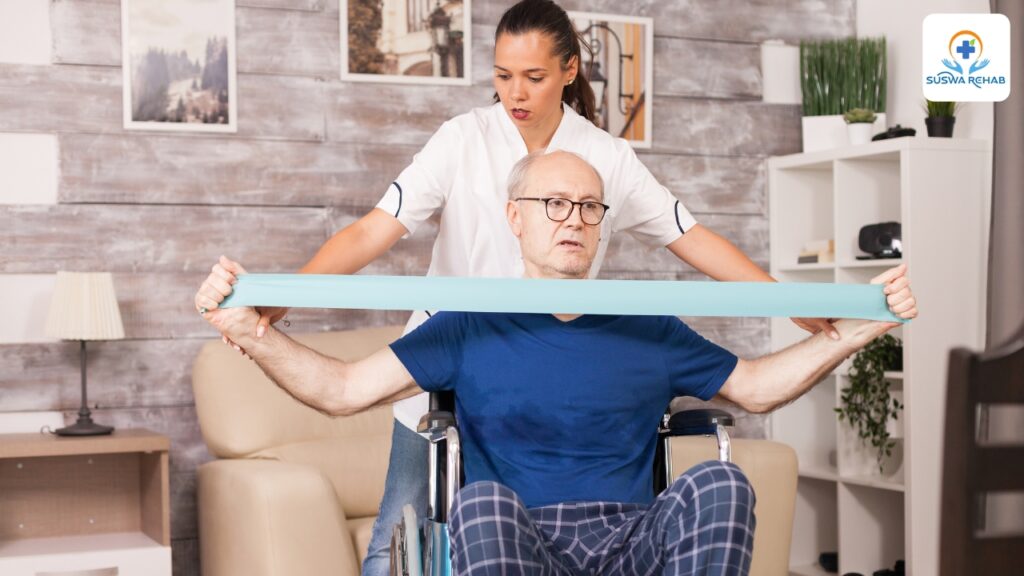
A stroke can dramatically affect an individual’s mobility, balance, and day-to-day function. Rehabilitation usually involves a multidisciplinary process of therapeutic support, and physiotherapy has an important role in stroke rehabilitation. In stroke rehabilitation, a physiotherapist will provide therapeutic support to patients to help them maximize their recovery of strength, coordination, and independence as rapidly and safely as possible.
1. Understanding Stroke and Mobility Challenges
Once a person has sustained a stroke, the brain may have difficulty in sending signals to the muscles resulting in:
Weakness or paralysis on one side of the body
Loss of balance and coordination
Difficulty walking or executing daily activities
Through specific exercises and therapies physiotherapy can address these challenges and assist in retraining the brain and muscles.
2. Early Physiotherapy Improves Recovery
Initiating physiotherapy as soon as your patient is medically stable will help reduce complications and promote a faster recovery. Early interventions include:
Range of motion exercises to prevent stiffness in joints
Gentle stretching to help with muscle tightness
Positioning techniques to prevent pressure sores and deformities
3. Strengthening Muscles and Improving Balance
After a stroke, weakness in the muscles is common. Physiotherapists may use strength training, resistance training, and functional movements to aid patients in recovering:
Leg strength to be able to walk
Arm strength to help with activities of daily living
Core stability to help with balance
Improved strength and stability decreases the risk of falls and increases independence.
4. Retraining Walking and Coordination
A primary purpose of physiotherapy following a stroke is to return to walking as safely as possible. This may involve:
Gait training with the use of parallel bars, walkers, or treadmills
Task-specific training to practice coordination and foot placement
Balance exercises to regain confidence to move
This allows the brain to relearn movement skills, a process termed neuroplasticity.
5. Functional Exercises for Daily Life
Physiotherapy is also geared toward functional daily tasks such as:
- Sitting on and standing from an upright position
- Climbing stairs
- Reaching, grasping, lifting objects.
By participating in the exercises related to these activities, patients will gradually return to an independent and rewarding life.
6. Combining Physiotherapy with Other Therapies
To achieve the best rehabilitation outcomes after a stroke, physiotherapy is often used together with:
Occupational therapy when working on fine motor skills
Speech therapy for communication or swallowing issues
Psychological or emotional support
This multi-dimensional approach ensures complete rehabilitation.
Recommended High-Ranking Keywords (Naturally Included)
Stroke rehabilitation
Physiotherapy after stroke
Regaining mobility after stroke
Stroke recovery exercises
Post-stroke physiotherapy
Neuroplasticity in stroke rehabilitation
Walking exercises after stroke
✅ Conclusion:
When it comes to restoring mobility following a stroke, physiotherapy is highly beneficial. Stroke survivors may be able to improve their strength, coordination, and independence through exercises, balance training, and functional activities. Starting physiotherapy as early and consistently as possible greatly improves outcomes, and helps stroke survivors feel more confident and safe as they return to their daily life activities.