
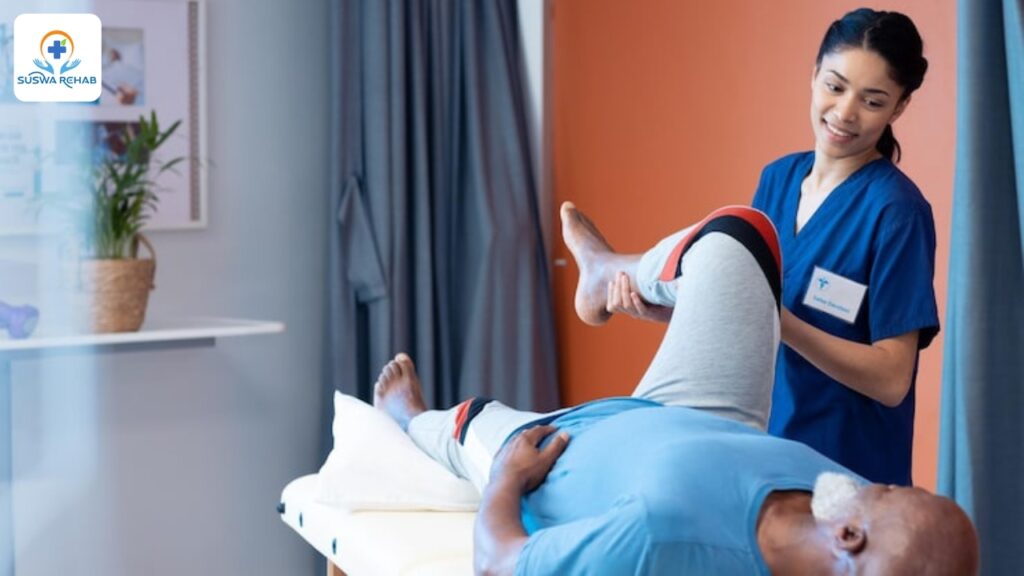
Knee pain is a prevalent joint issue that impacts people of all ages. It could arise from injuries, arthritis, overuse, poor postural habits, or wear and tear due to age. Because the knees will be a key player in providing support to body weight as well as mobility, even mild pain or discomfort will limit everyday activity.
Rather than solely using painkillers or going through invasive procedures, physiotherapy for knee pain focuses on regaining function, strength, and mobility, while decreasing stiffness and restoring overall knee joint health. A physiotherapist’s prescribed and structured knee rehabilitation program, designed for your knee problems, will rehab you faster and prevent future complications.
In this blog, let’s discuss the best physiotherapy treatments on record, as well as rehabilitation exercises to relieve knee pain.
Common Causes of Knee Pain
Prior to initiating any treatment, it is essential to recognizing the causative factors of knee pain. Some of the more common causative factors include:
Arthritis (Osteoarthritis, Rheumatoid Arthritis) – Inflammation of the joint with damage to the cartilage.
Ligament Injuries (ACL, MCL tears) – This occurs typically due to sports or trauma.
Meniscus Tears – Damage to the knee cartilage that provides cushioning for the knee joint.
Patellofemoral Pain Syndrome – This syndrome is pain around the kneecap due to overuse or misalignment.
Post-Surgical Stiffness – This is often seen after knee replacement or knee arthroscopy.
Physiotherapy Treatments for Knee Pain
1. Manual Therapy
Hands-on techniques such as joint mobilization and soft tissue massage help reduce stiffness, improve circulation, and relieve muscle tension around the knee.
2. Electrotherapy
Physiotherapists often use TENS (Transcutaneous Electrical Nerve Stimulation), ultrasound therapy, or laser therapy to reduce pain, inflammation, and swelling.
3. Strengthening and Flexibility Training
Custom exercise programs strengthen the muscles around the knee (quadriceps, hamstrings, calves), providing better support and stability. Stretching reduces stiffness and improves range of motion.
4. Balance and Proprioception Training
Exercises to improve balance and coordination help prevent falls and protect the knee from further injuries.
5. Post-Surgery Rehabilitation
After knee replacement surgery or arthroscopy, physiotherapy ensures faster recovery by reducing swelling, improving flexibility, and strengthening weakened muscles.
Best Physiotherapy Exercises for Knee Pain
These physiotherapy-approved knee pain exercises can be safely performed at home to improve strength and mobility.
1. Quadriceps Sets
Position yourself so that your legs are out in front of you.
Tighten your thigh muscle by pushing the back of your knee into the floor.
Hold for 5-10 seconds and then relax.
Repeat this exercise 10-15 times.
✅ Benefit: Strengthens quadriceps and decreases knee stiffness.
2. Straight Leg Raises
Position yourself on your back, one knee bent and opposite leg straight.
Raise the straight leg off the ground 12 inches.
Hold for 5 seconds and slowly lower.
Repeat 10–12 times on both sides.
✅ Purpose: Strengthens the quadriceps without putting stress on the knee joint.
3. Heel Slides
Lie on your back with your legs straight.
Slowly slide one heel towards your buttocks while bending your knee.
Hold this position for 5 seconds, then slide your heel back.
Repeat this action 10–15 times.
✅ Benefit: Increases flexibility and reduces stiffness in the knee joints.
4. Step-Ups
Utilize a short step or stable platform.
Step up with one leg and then the other.
Step down slowly, then repeat.
Complete 10–12 repetitions on each leg.
✅ Benefit: Works quads, glutes, and calves and increases balance.
5. Hamstring Stretch
Sit on the edge of a chair with one leg straight out in front of you.
Lean forward gently until you feel a stretch in the back of your thigh.
Hold for 15-20 seconds.
Repeat 3 times on each side.
✅ Benefit: Helps to relieve tightness and improve mobility at the knees.
Tips for Managing Knee Pain at Home
Steer clear of excessive standing or sitting.
Wear shoes with appropriate cushioning.
Ice packs for swelling and heat packs for stiffness should be utilized.
Being at a healthy weight will help lessen stress on the knees.
Engage in exercises that can be done long term.
Final Thoughts
Knee pain can affect your mobility and quality of life if not treated properly. The most encouraging aspect is that physiotherapy for knee pain is a safe and effective way to provide longer-lasting pain relief without the need for medication or surgery.
Physiotherapists utilize manual therapy, electrotherapy, and strengthening/rehabilitative exercises to be more efficient in speeding patient recovery and preventing future injuries. If you’re availing of knee pain, visiting a licensed physiotherapist will allow you to pursue customized treatment options suited to your specific needs.