
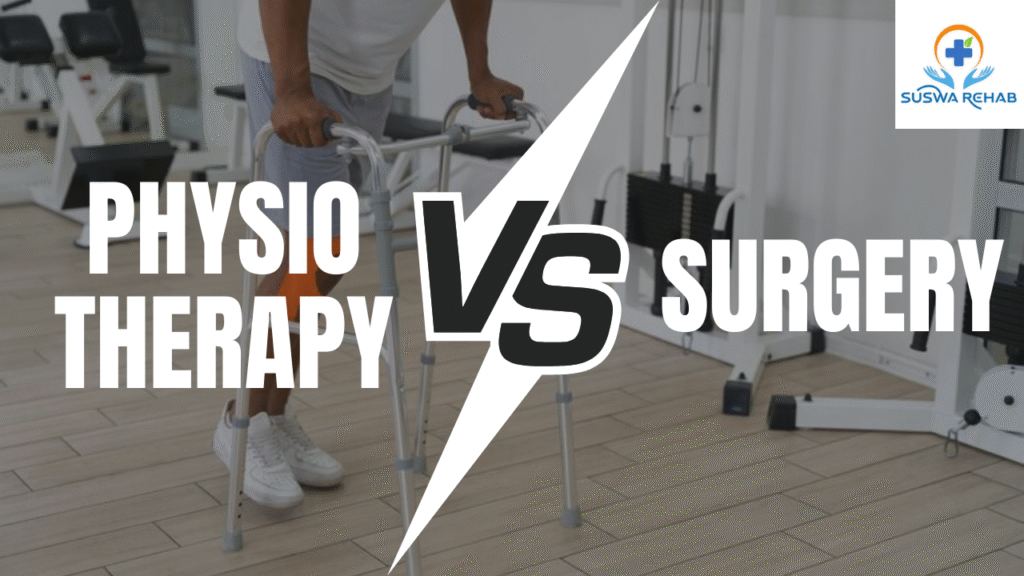
When confronted with an injury or chronic condition, many patients ponder whether physiotherapy or surgery is the best route to recovery. Each treatment has its own benefits and drawbacks, and the decision depends on the severity of your condition, overall health, and other personal goals. Understanding the key differences may assist in your decision-making.
When Physiotherapy Is Recommended
Physiotherapy is often the first line of treatment for many musculoskeletal issues. It focuses on non-invasive methods to restore movement, reduce pain, and strengthen the body.
Benefits of Physiotherapy:
Non-surgical method: No risk of surgery, anesthesia, or long hospital stay.
Pain relief and mobility: Exercises, manual therapy, and modalities such as ultrasound or TENS decrease pain and stiffness of myalgia.
Strengthen and Prevent: Trigger muscles to support weak joints and reduce risk of re-injury.
Quicker return to normal daily activities: Patients are able to return to a normal life with little time lost.
Cost effective: Physiotherapy is typically less expensive than surgery and potentially less expensive than short stays in a hospital.
Conditions where physiotherapy works best:
- Mild to moderate arthritis
- Back pain and slipped disc (without severe nerve compression)
- Sports injuries (sprains, strains, tendonitis)
- Post-fracture rehabilitation
- Pre- and post-operative strengthening
When Surgery Is Necessary
Surgery is generally considered when conservative treatments like physiotherapy, medication, or lifestyle changes are no longer effective.
Benefits of Surgery:
- Corrects structural damage: Ideal for severe joint damage, ligament tears, or herniated discs compressing nerves.
- Restores function in critical cases: Joint replacement, ACL repair, or spine surgery can provide long-term relief.
- Improves quality of life: Patients with advanced conditions may find surgery necessary to regain independence.
Conditions where surgery may be the better choice:
- Severe osteoarthritis requiring joint replacement
- Major ligament or meniscus tears
- Advanced spinal disc herniation with nerve compression
- Severe fractures not healing with conservative care
Physiotherapy After Surgery
Even when surgery is chosen, post-surgical physiotherapy is essential for recovery. It helps:
- Regain joint movement and flexibility
- Rebuild muscle strength around the operated area
- Improve circulation and healing
- Reduce the risk of post-operative complications
Physiotherapy vs. Surgery: How to Decide?
- Mild to moderate cases: Physiotherapy is often the best first step.
- Severe or advanced cases: Surgery may be required, followed by physiotherapy.
- Patient goals: Active individuals may choose surgery for faster long-term recovery, while others may prefer a conservative approach.
- Doctor’s advice: A specialist evaluation, diagnostic scans, and your medical history should guide the final decision.
Physiotherapy vs. Surgery: Recovery Comparison Table
To make the decision clearer, here’s a side-by-side comparison of physiotherapy and surgery for recovery:
| Aspect | Physiotherapy | Surgery |
|---|---|---|
| Approach | Non-invasive, focuses on exercises, manual therapy, and lifestyle changes | Invasive, involves medical procedures to repair or replace damaged structures |
| Recovery Time | Generally shorter, patients can resume daily activities quickly | Longer recovery, requires hospital stay and rehabilitation |
| Risks | Minimal risks, no anesthesia or surgical complications | Risk of infection, anesthesia side effects, and surgical complications |
| Cost | More affordable and cost-effective | Expensive due to hospital, surgeon, and post-op costs |
| Effectiveness | Best for mild to moderate conditions, pain management, and mobility improvement | Best for severe or advanced conditions where structural damage needs correction |
| Examples of Use | Back pain, sports injuries, arthritis, post-fracture rehab | Joint replacements, ACL tears, severe fractures, spinal surgeries |
| Role After Surgery | Helps prevent surgery in many cases | Essential for recovery after surgery to regain mobility and strength |
Final Note
- Choose physiotherapy first for mild to moderate conditions and pain relief.
- Opt for surgery when structural damage is severe and conservative care no longer works.
- In many cases, the best results come from combining both — surgery for repair, followed by physiotherapy for complete recovery.
Conclusion
Physiotherapy and surgery both play valuable roles in recovery. Physiotherapy is often the safe, reasonable, non-invasive, and cost-effective answer for most conditions. Surgery is vital in cases where there is severe damage and requires structural repair. Often, the two approaches supplement each other – the surgery takes care of the damage and physiotherapy facilitates full rehabilitation.
Be sure to consult with your healthcare provider and physiotherapist before making this important decision to find the best plan for recovery and rehabilitation for your specific needs.